Research Overview
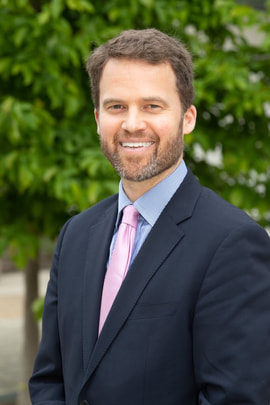
Matthew S. Erie (J.D., Ph.D.) is an Associate Professor, Member of the Law Faculty, and Associate Research Fellow of the Socio-Legal Studies Centre at the University of Oxford. Professor Erie's research lies at two types of intersections: the first is between Anglo-American common law and Asian law and the second is between law and the social sciences. Trained as a lawyer and anthropologist, his work addresses such issues as law and capitalism, global (dis)orders, comparative international law, socio-legal methods and theories, and China. Specifically, he has written on property law, international investment, dispute resolution, international law, Chinese law, and Islamic law, often in a comparative frame. His work is either forthcoming or has appeared in such journals as the Wisconsin Law Review, Alabama Law Review, American Journal of Comparative Law, Harvard International Law Journal, American Journal of International Law Unbound, Yale International Law Journal, Columbia Journal of Transnational Law, Virginia Journal of International Law, Law and Social Inquiry, and American Ethnologist. His first book, China and Islam: The Prophet, the Party, and Law (Cambridge University Press, 2016), is the first ethnographic study of the relationship between sharia and state law in China. His current research project “China, Law and Development,” funded by a European Research Council (ERC) Starting Grant (€1.5 million), examines China’s approach to international law and the legal and regulatory systems of host states receiving Chinese capital. He is currently working on a number of book projects which grow out of this project.
He has taught law in the U.S., U.K., China, Singapore, Pakistan, and Cambodia. In the U.S., he has taught at NYU Law School and the University of Hawaii Richardson School of Law. In fall 2024, he is teaching at Georgetown University Law Center and George Washington University Law School. His teaching includes property, civil procedure, business organizations, international business transactions, international law, comparative law, and Chinese law among other subjects. Professor Erie previously held academic positions at Princeton University and NYU Law School, and he was a visiting scholar at the National University Singapore Law Faculty. In the fall 2018, he was a Global Research Fellow in the Hauser Global Program of NYU Law School. He is also an Honorary Research Fellow at Shanghai Jiaotong University Koguan Law School. He practiced law in the New York and Beijing offices of Paul Hastings LLP where he focused on corporate real estate transactions and white-collar investigations (e.g., FCPA). In addition to the ERC, his research has been supported by the National Endowment for the Humanities, Social Science Research Council, Luce Foundation/American Council of Learned Societies, Fulbright-Hays, and National Science Foundation. He holds degrees from Cornell University (Ph.D., Anthropology), University of Pennsylvania (J.D.), Tsinghua University Law School (LL.M.), and Dartmouth College (B.A). Professor Erie is a member of the New York Bar, Fellow of the Chartered Institute of Arbitrators, Fulbright Specialist, Fellow of the Public Intellectual Program of the National Committee on U.S.-China Relations, Wilson China Fellow, and is an Advisory Board Member of the International Law & Social Sciences Interest Group of the American Society of International Law.
Please contact him at matthew"dot"erie"at"law"dot"ox"dot"ac"dot"uk".
He has taught law in the U.S., U.K., China, Singapore, Pakistan, and Cambodia. In the U.S., he has taught at NYU Law School and the University of Hawaii Richardson School of Law. In fall 2024, he is teaching at Georgetown University Law Center and George Washington University Law School. His teaching includes property, civil procedure, business organizations, international business transactions, international law, comparative law, and Chinese law among other subjects. Professor Erie previously held academic positions at Princeton University and NYU Law School, and he was a visiting scholar at the National University Singapore Law Faculty. In the fall 2018, he was a Global Research Fellow in the Hauser Global Program of NYU Law School. He is also an Honorary Research Fellow at Shanghai Jiaotong University Koguan Law School. He practiced law in the New York and Beijing offices of Paul Hastings LLP where he focused on corporate real estate transactions and white-collar investigations (e.g., FCPA). In addition to the ERC, his research has been supported by the National Endowment for the Humanities, Social Science Research Council, Luce Foundation/American Council of Learned Societies, Fulbright-Hays, and National Science Foundation. He holds degrees from Cornell University (Ph.D., Anthropology), University of Pennsylvania (J.D.), Tsinghua University Law School (LL.M.), and Dartmouth College (B.A). Professor Erie is a member of the New York Bar, Fellow of the Chartered Institute of Arbitrators, Fulbright Specialist, Fellow of the Public Intellectual Program of the National Committee on U.S.-China Relations, Wilson China Fellow, and is an Advisory Board Member of the International Law & Social Sciences Interest Group of the American Society of International Law.
Please contact him at matthew"dot"erie"at"law"dot"ox"dot"ac"dot"uk".
